Understanding the Tender Process in Construction Projects
The construction industry relies on a well-defined tender process to ensure transparency, fairness, and efficiency in project procurement. A tender, in essence, is a formal offer to undertake a construction project for a specified price and within a set timeframe. This crucial stage acts as the bridge between a client’s project vision and the contractors who will bring it to life. Understanding what constitutes a tender, and the intricacies of the tendering process, is fundamental for all stakeholders involved, from property developers to subcontractors.
What is a Tender in Construction?
In the realm of construction, a tender is a bid submitted by a contractor in response to an invitation to tender (ITT) issued by a client or their representative. This ITT document meticulously outlines the project’s scope, specifications, design, timelines, and contractual terms. The tender document itself is the contractor’s formal proposal, detailing how they plan to execute the project, the total cost involved, and the proposed completion date. It is a legally binding offer that, if accepted, forms the basis of the construction contract.
The Importance of a Well-Defined Tender
A comprehensive and clearly articulated tender process is paramount for several reasons. Firstly, it ensures that clients receive competitive bids, fostering a cost-effective approach to construction. Secondly, it provides a standardized framework for evaluating different proposals, allowing for an objective selection of the most suitable contractor based on price, quality, experience, and methodology. Without a robust tendering system, projects risk delays, cost overruns, and the engagement of contractors who may not be adequately equipped to handle the complexities of modern construction.
The Construction Tender Process Explained
The journey from project conception to contract signing involves several distinct phases within the tender process. Each phase plays a vital role in ensuring a successful project outcome.
1. Pre-qualification
Before inviting tenders, clients often pre-qualify potential contractors. This involves assessing their financial stability, technical capabilities, past performance, and relevant experience. This step helps to narrow down the field to only those contractors who are genuinely capable of undertaking the project.
2. Invitation to Tender (ITT) Issuance
Once a list of pre-qualified contractors is established, the client issues the ITT. This document is a comprehensive package containing all necessary information for contractors to prepare their bids. It typically includes:
* **Project plans and drawings:** Detailed architectural and engineering designs.
* **Specifications:** Outlining the quality of materials and workmanship.
* **Bill of Quantities (BOQ):** A detailed list of all materials and labor required, with quantities.
* **Contractual terms and conditions:** Including payment schedules, insurance requirements, and dispute resolution mechanisms.
* **Site information:** Details about the project location and any site-specific constraints.
3. Bid Submission
Contractors carefully review the ITT documents, conduct site visits, and consult with subcontractors and suppliers to formulate their bids. The tender bid will include:
* **Pricing:** A breakdown of costs for labor, materials, plant, and overheads.
* **Methodology:** How the contractor proposes to execute the work.
* **Programme:** A detailed schedule of works.
The submitted bids are typically sealed and must be received by a specified deadline.
4. Tender Evaluation
Upon receipt, the client’s evaluation team meticulously assesses each tender. This involves:
* **Checking for compliance:** Ensuring the bid meets all the requirements of the ITT.
* **Clarifications:** Seeking
clarifications from bidders if any aspects of their tenders are unclear.
* **Scoring:** Evaluating bids based on pre-defined criteria, which may include price, technical merit, experience, safety record, and sustainability commitments.
The evaluation process is designed to be objective and impartial, ensuring that the best value for money is achieved, not just the lowest price.
5. Award of Contract
The contractor who best meets the evaluation criteria is awarded the contract. This is usually communicated formally, followed by the signing of the contract documents.
Types of Tenders in Construction
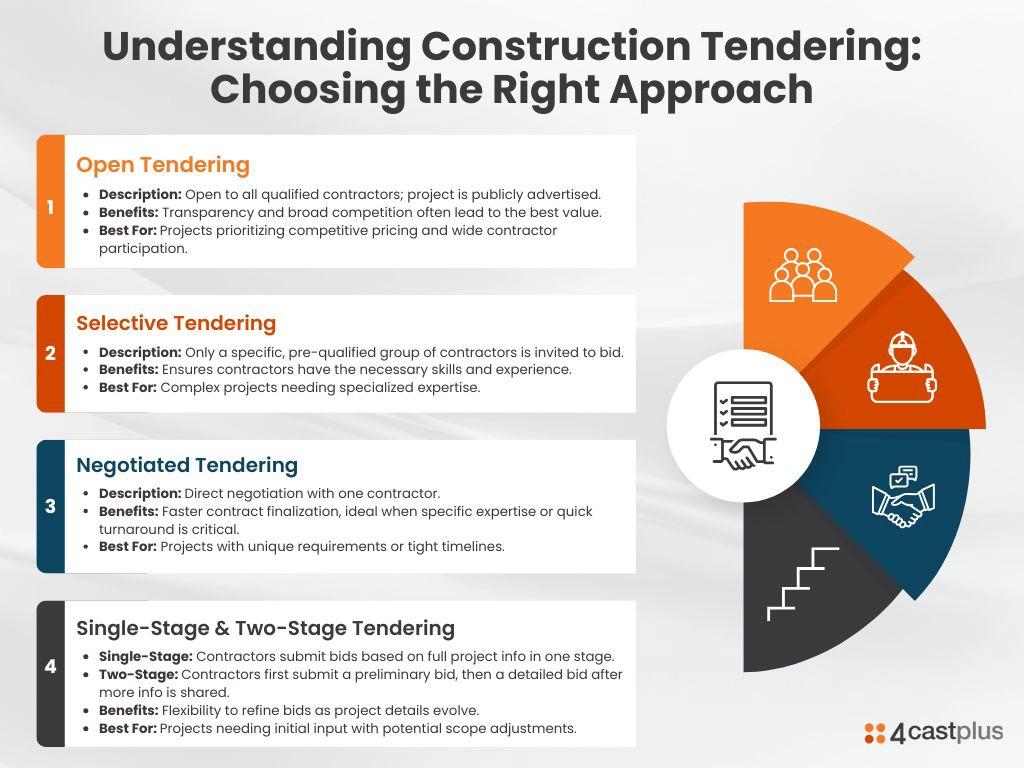
Different procurement strategies lead to various types of tenders, each suited to specific project needs.
| Tender Type | Description |
| :——————- | :—————————————————————————————————————— |
| **Open Tenders** | Advertised publicly, allowing any qualified contractor to submit a bid. |
| **Selective Tenders** | Invitations are sent only to a pre-selected list of contractors known to have the required capabilities. |
| **Negotiated Tenders**| Used when a single contractor is identified as the most suitable, allowing for direct negotiation of terms. |
| **Single-Source Tenders** | Similar to negotiated tenders, but typically used in specific circumstances like emergency repairs or specialized work. |
Benefits of Competitive Tendering
* **Cost Efficiency:** Drives down prices through competition.
* **Quality Assurance:** Encourages contractors to offer the best possible quality to win the bid.
* **Innovation:** Can stimulate innovative solutions and methodologies.
* **Transparency:** Provides a clear and open process for all participants.
Frequently Asked Questions about Construction Tenders
**Q1: What happens if a contractor submits a tender after the deadline?**
A1: Tenders submitted after the specified deadline are almost always rejected, regardless of their content, to maintain fairness and the integrity of the tender process.
**Q2: Can project specifications be changed after the tender has been issued?**
A2: While significant changes are generally avoided after the ITT is issued, minor clarifications or amendments may be issued as ‘addenda’ to all invited bidders if absolutely necessary.
**Q3: What is the role of a Quantity Surveyor in the tender process?**
A3: A Quantity Surveyor (QS) plays a critical role in preparing the Bill of Quantities, evaluating tender submissions, and managing the cost throughout the construction project.
Conclusion
The tender process in construction is a cornerstone of successful project delivery, embodying principles of fairness, competition, and transparency. It is a complex yet vital procedure that allows clients to secure the best possible outcomes for their investments. By understanding the components of a tender and the stages involved, stakeholders can navigate this critical phase with greater confidence and effectiveness. Ultimately, a well-managed tender process lays the groundwork for a project that is completed on time, within budget, and to the highest standards of quality. This rigorous approach ensures accountability and fosters trust among all parties involved in bringing construction visions to reality.
