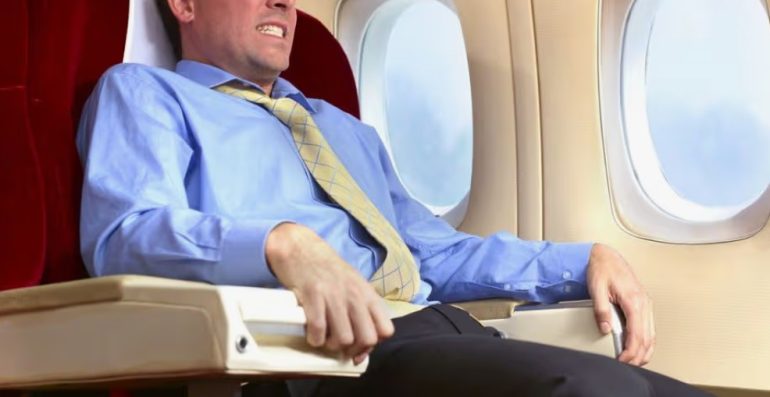
Somewhere between buckling your seatbelt and the moment the engines roar to life, the rational part of your brain goes quiet, and something older, faster, and far less reasonable takes over. Your heart rate climbs. Your palms dampen. A quiet but insistent voice starts cataloguing everything that could go wrong. If this sounds familiar, you are not alone and, more importantly, you are not broken.
Estimates consistently place the prevalence of fear of flying between 10 and 40 percent of adults in industrialised countries, making it one of the most common specific phobias in the world. Yet the majority of people who experience it never seek structured help, relying instead on alcohol, white-knuckled endurance, or outright avoidance. The cost of that avoidance in missed promotions, skipped family events, forfeited adventures is enormous and entirely unnecessary, because the mechanisms behind flight anxiety are well understood and highly treatable.
This article is written for the nervous flyer who wants to go deeper than generic reassurances. If you have ever wondered why the sound of the flaps deploying sent your nervous system into full alert, why you catastrophise about turbulence even when you know the statistics, or why anxiety seems to peak before you even reach the gate, the answers are here. So are the evidence-based strategies from controlled breathing to structured fear of flying therapy that genuinely shift the dial. Read on, because understanding what is actually happening inside your mind and body is the first and most powerful step toward reclaiming the skies.
Why Fear of Flying Is Not Simply “Being Afraid of Crashing”
A common misconception is that flight anxiety is a single, uniform fear with a single cause. Research tells a more nuanced story. For many people, fear of flying is actually a composite of several distinct anxieties that happen to converge at the airport. Understanding which layer is most active for you is critical because the most effective interventions differ depending on the root.
The Four Most Common Underlying Fears
1. Loss of control. Humans experience markedly less anxiety when they are the ones holding the steering wheel, even when objective risk is higher. Surrendering agency to pilots, air traffic controllers, and automated systems triggers a deep unease in people with a high need for control a psychological trait that research links to elevated flight anxiety consistently.
2. Claustrophobia and bodily confinement. The cabin environment, fixed seating, restricted movement, and sealed doors can activate claustrophobic responses that have nothing to do with flying itself. For these passengers, it is the physical containment, not the altitude, that drives distress.
3. Anxiety sensitivity. People high in anxiety sensitivity (AS) fear the physical symptoms of anxiety themselves. When their heart rate spikes or their breathing tightens on a plane, they interpret those sensations as evidence of imminent catastrophe rather than as ordinary stress responses. Research published in Behaviour Research and Therapy specifically identified AS as a key vulnerability factor in flight phobia, noting that changes in heart rate were far more predictive of in-flight distress for high-AS individuals than for low-AS ones.
4. Generalised anxiety that “lands” on flying. For some people, the plane is simply the most dramatic object available for a free-floating anxiety that would find another outlet if flying were removed. In these cases, addressing only the flying-specific fear treats the symptom, not the system.
Identifying which category or combination of categories applies to you shapes everything from the breathing technique you practise to whether a structured fear of flying course or individual psychotherapy is the better starting point.
The Statistical Reality: Why Your Fear and the Facts Are So Far Apart
You almost certainly know, intellectually, that flying is safe. But knowing something intellectually and feeling it viscerally are neurologically distinct processes, and simply repeating the statistics to yourself is rarely sufficient. That said, the facts deserve to be stated clearly, because accurate risk calibration is the necessary foundation for every other intervention.
The reason this knowledge fails to comfort most nervous flyers is not stupidity — it is the operation of two well-documented cognitive biases. Availability bias causes people to overestimate the probability of events they can readily imagine (plane crashes receive saturated media coverage; fatal car journeys do not). Dread risk bias causes people to react more strongly to risks that feel uncontrollable and catastrophic, regardless of actual probability. Both biases are evolutionarily sensible heuristics that simply misfire in the context of commercial aviation.
Recognising these biases as biases naming them when they arise is not just philosophical. It is the first cognitive restructuring technique, and it begins to weaken the fear’s grip by inserting a wedge of self-awareness between stimulus and response.
The Overlooked Physiological Factors That Make In-Flight Anxiety Worse
Most pre-flight advice focuses on psychology. Far less attention is paid to the physiological conditions of air travel itself conditions that can amplify the physical symptoms of anxiety and, through anxiety sensitivity, trigger a feedback loop that escalates panic. Being aware of these factors gives nervous flyers practical, actionable leverage.
Cabin Altitude and Oxygen Levels
Commercial aircraft cabins are typically pressurised to the equivalent of an altitude between 6,000 and 8,000 feet, not sea level. At that altitude, blood oxygen saturation decreases modestly compared to ground level. For most healthy passengers, this is entirely imperceptible. For someone already in a heightened state of anxiety, however, the mild physiological effects of slight shortness of breath, increased fatigue, occasional light-headedness can be misinterpreted as the early signs of a panic attack. Knowing in advance that the cabin environment naturally produces these sensations removes their power to escalate anxiety.
Dehydration
The low-humidity environment of a pressurised cabin typically around 10–20% relative humidity, compared to 30–60% in a comfortable indoor space accelerates dehydration. Dehydration, even at mild levels, raises heart rate and can induce headaches and cognitive fog. Both symptoms are easily mistaken for anxiety symptoms by passengers already primed to monitor their bodies for danger. Drinking water consistently throughout a flight, and especially before boarding, is not merely comfort advice it is a meaningful physiological intervention.
Caffeine and Alcohol: The Two Most Counterproductive Crutches
Many nervous flyers reach for coffee in the pre-flight terminal (to feel alert and in control) and alcohol once aboard (to “take the edge off”). Both strategies directly undermine physiological calm. Caffeine is a stimulant that raises heart rate and amplifies the physical symptoms of anxiety precisely the signals that anxiety-sensitive individuals interpret as threat cues. Alcohol, despite its short-term sedating effect, disrupts sleep architecture, reduces oxygen efficiency, and critically worsens anxiety rebound in the hours following consumption. If you land depleted and irritable after a night flight during which you drank, that is not a coincidence.
Breathing Patterns
In a state of anxiety, most people breathe shallowly and rapidly a pattern that reduces carbon dioxide levels in the blood (hypocapnia) and paradoxically amplifies the physical sensation of breathlessness and light-headedness. This feeds directly back into the threat-detection cycle. Deliberately slowing the breath, and particularly extending the exhalation activates the vagus nerve and engages the parasympathetic nervous system’s “rest and digest” response. The 4-7-8 technique (inhale for 4 counts, hold for 7, exhale for 8) has robust empirical support for anxiety regulation and it requires no equipment, no prescription, and no pre-boarding preparation.
Before Takeoff: Specific Strategies That Actually Work
The period between arriving at the airport and the aircraft reaching cruising altitude is, for most nervous flyers, the most distressing part of the journey. The following strategies are grounded in cognitive-behavioural and physiological research and are designed to interrupt the escalating anxiety cycle at its most vulnerable points.
Arrive Early and Move Slowly
Rushing to the gate activates the sympathetic nervous system for reasons that have nothing to do with flying. By the time you board a plane having sprinted through security, your heart rate is already elevated, your body is already in a state of arousal, and the amygdala is primed. Arriving with comfortable time to spare, moving deliberately, and taking five minutes to sit quietly in the gate area allows baseline physiological calm to be established before boarding begins.
Choose Your Seat Strategically
This is not superstition. Seats over the wings experience significantly less turbulence-associated movement than seats at the tail. If claustrophobia is a component of your anxiety, an aisle seat reduces the physical sense of confinement. If watching the ground recede triggers your fear response, window seats toward the front (where the view is dominated by sky rather than runway) may help. Each of these is a small but genuine environmental modification and environmental control is a valid CBT technique.
Name What You Are Experiencing
Neuroscience research by Matthew Lieberman and colleagues at UCLA demonstrated that labelling emotional experiences a process called “affect labelling” measurably reduces amygdala activation. Saying internally, “I am noticing that I feel anxious, and that is a normal response to perceived threat,” is not self-deception. It is neurologically accurate self-observation that re-engages the prefrontal cortex and dampens the threat response. It is also the core mechanism underlying mindfulness-based interventions for anxiety.
Distinguish Normal Sounds and Sensations from Danger Cues
Much of flight anxiety is sustained by a failure of aviation literacy. The thud as the landing gear retracts, the hiss of the pressurisation system equalising, the engine pitch change as the autopilot adjusts thrust, the sound of flaps deploying on approach each of these is routine, expected, and a sign that the aircraft’s systems are functioning exactly as designed. Many structured fear of flying courses include a dedicated module on aircraft sounds and sensations precisely because informed interpretation of these cues is one of the most reliably effective de-escalation tools available.
Engage the Body, Not Just the Mind
Progressive muscle relaxation systematically tensing and releasing major muscle groups has been used in anxiety treatment since Edmund Jacobson introduced it in the 1920s and remains an evidence-backed technique for reducing physiological arousal. A simplified protocol: beginning at the feet, tense each muscle group for five seconds, then release for ten, moving upward through the body. By the time you reach your shoulders and jaw, the cumulative effect on heart rate and muscular tension is measurable and meaningful.
Turbulence: The Most Misunderstood Part of Flight
For many anxious flyers, turbulence is the single most feared element of air travel. It is also one of the most misunderstood. The fear is understandable: involuntary movement in an aircraft triggers the vestibular system and produces the sensation of instability. But the physiological reality of what turbulence means for the structural integrity of a modern commercial aircraft is radically different from how it feels.
Modern commercial aircraft are engineered to withstand forces many times greater than anything encountered in normal turbulence. The “wings flexing” that terrifies passengers is a deliberate safety feature rigid wings would fail under stress that flexible ones absorb. Pilots receive specific training for turbulence avoidance and management, and weather radar allows flight crews to navigate around significant weather cells rather than through them.
Even “severe” turbulence the kind that spills drinks and briefly lifts unbelted passengers presents no structural risk to the aircraft. Injuries from severe turbulence are almost exclusively the result of not wearing a seatbelt, which is precisely why the seatbelt sign is a genuine instruction rather than a precaution. The aircraft is fine. The only real danger is to the cup of coffee.
When Strategies Aren’t Enough: Structured Treatment Options
For a significant proportion of nervous flyers, self-help strategies provide partial relief but fall short of producing the genuine comfort needed to fly without distress. This is not a failure of willpower or intelligence. It reflects the nature of specific phobias: deeply conditioned fear responses that require structured, repeated, and professionally guided intervention to reliably extinguish.
FAQs about Flight Anxiety
-
Q1: Is fear of flying a diagnosable mental health condition?
Yes. When flight anxiety is persistent, intense, and causes clinically significant distress or impairment such as avoiding air travel altogether or enduring it with extreme distress it meets the diagnostic criteria for a specific phobia under the DSM-5. This is important not as a label but as a signal that the condition is well-understood, well-researched, and well-treated. Having a clinical diagnosis also means that structured treatment (including therapy) is a legitimate and evidence-backed response, not an overreaction.
-
Q2: How common is fear of flying, really?
Research estimates vary, but the figure most consistently cited in peer-reviewed literature is that 10 to 40 percent of adults in industrialised countries experience some degree of flight anxiety. A smaller subset typically estimated at 2.5 to 6.5 percent meets the clinical threshold for specific phobia of flying (aviophobia). This makes it one of the most prevalent specific phobias and, significantly, one of the most treatable.
-
Q3: Does fear of flying get worse with age?
Not inevitably, but it can. For people who fly infrequently or who avoid flying over long periods, the fear is not simply held in stasis it tends to consolidate and intensify because avoidance prevents the corrective emotional experiences that would naturally weaken the conditioned fear response. Conversely, people who continue to fly while using evidence-based coping strategies typically find their anxiety diminishes over time. The direction of travel is largely determined by what you do with the fear, not by the passage of time itself.
-
Q4: Will turbulence ever genuinely be dangerous to the aircraft?
Modern commercial aircraft are engineered to withstand turbulence forces many times greater than anything encountered in normal or even severe air turbulence. Aircraft structures are certified to tolerances far beyond operational limits. Injuries associated with turbulence are almost exclusively confined to unbelted passengers, which is why the instruction to keep your seatbelt fastened whenever seated is a substantive safety recommendation. Structural failure from turbulence in a modern commercial airliner is, in practical terms, not a meaningful risk the aircraft will handle; the seatbelt is for you.
-
Q5: What is the fastest way to calm down during a flight?
The most immediate physiological intervention is controlled breathing, specifically extending the exhalation. A breath in for 4 counts, hold for 7, and out for 8 (the 4-7-8 method) activates the vagus nerve and engages the parasympathetic nervous system within minutes. Pair this with grounding techniques pressing your feet deliberately into the floor, feeling the texture of the armrest to re-anchor your attention in the present rather than a catastrophic imagined future. These techniques provide real, measurable relief and can be practised before any flight so that they become an automatic resource under stress.
Conclusion
The most important thing to understand about fear of flying is that it is not a character flaw, a weakness, or an accurate signal that flying is dangerous. It is a conditioned response, a learned association between the context of flight and the experience of threat that has been reinforced, often over many years, by avoidance, catastrophic thinking, and the misinterpretation of normal physiological sensations.
Conditioned responses can be extinguished. The research is unambiguous on this point: with appropriate intervention, the overwhelming majority of people who struggle with flight anxiety can achieve meaningful, lasting relief. Not merely tolerating flying actually flying without distress.
If you are ready to take that process seriously to move from white-knuckling your way through flights to genuinely getting over fear of flying structured specialist support is the most evidence-backed route available. Programmes developed by clinicians who specialise in aviation anxiety, such as those offered through platforms like the Phobia.Aero fear of flying programme, bring together psychoeducation, CBT-based cognitive tools, and aviation-specific knowledge in a format designed precisely for people at every point on the anxiety spectrum. The investment is modest compared to the freedom it returns.
