
Effortless DIY Car Dent Repair: Your Guide to Pulling Dents Out of a Car
Dealing with a car dent can be a frustrating and expensive ordeal, often leading to costly trips to a professional auto body shop. However, many common dents can be successfully repaired at home with a little know-how and the right tools. This article will guide you through various methods on how to pull a dent out of a car, empowering you to tackle minor damage and restore your vehicle’s pristine appearance without breaking the bank.
Understanding Dent Types and Repair Suitability
Before diving into repair techniques, it’s essential to understand the different types of dents and which ones are suitable for DIY repair. Paintless Dent Repair (PDR) methods are most effective on shallow to medium-sized dents where the paint surface remains intact.
Shallow Dents: The DIYer’s Delight
Shallow dents, often caused by minor impacts like hail or “dooring,” are your best bet for a successful DIY repair. These dents haven’t creased or damaged the paint, making them prime candidates for methods that gently push or pull the metal back into its original position.
Deep or Creased Dents: Proceed with Caution
Dents with sharp creases, torn paint, or those located on body lines or edges can be more challenging. While some advanced DIY techniques might offer partial success, it’s often advisable to consult a professional for these types of damages to avoid further compromising the vehicle’s structure or paintwork.
Common DIY Dent Pulling Methods
Several accessible methods can help you pull a dent out of a car. These techniques utilize common household items or readily available specialized tools.
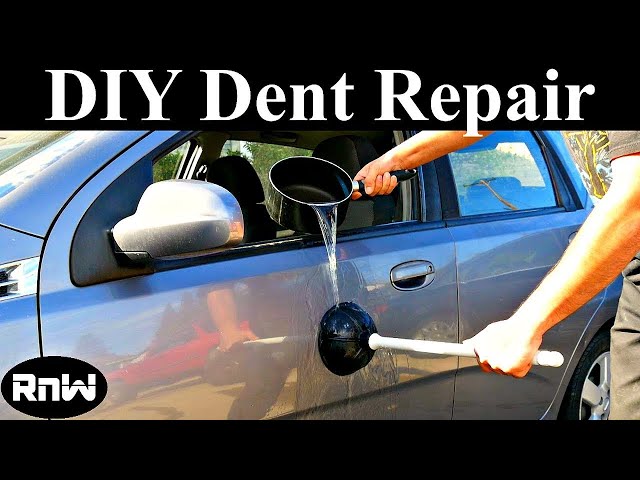
The Hot Water and Plunger Method
This classic method is surprisingly effective for larger, shallow dents on plastic bumpers or flexible metal panels.
Boiling water can help make the dented material more pliable, allowing it to return to its original shape.
- Carefully pour boiling water over the dented area to heat and soften the material.
- Immediately after, place a strong suction cup plunger over the center of the dent.
- With a firm and steady pull, try to pop the dent outwards.
- You may need to repeat this process a few times for optimal results.
The Hair Dryer and Compressed Air Method
This method relies on rapid temperature changes to flex the metal.
Thermal shock can encourage the metal to contract and pop the dent back into place.
First, heat the dented area with a hairdryer on a high setting for a couple of minutes. Then, immediately spray the heated area with compressed air held upside down. The rapid cooling can cause the metal to contract, potentially popping the dent out.
Suction Cup Dent Pullers
Available online or at automotive stores, these specialized tools offer a more controlled pull than a household plunger.
| Tool | Best For | Pros | Cons |
|---|---|---|---|
| Manual Suction Cup Puller | Shallow to moderate dents on flat surfaces | Inexpensive, easy to use | May require multiple attempts, less effective on curved surfaces |
| Bridge Dent Puller (with glue tabs) | Various dent sizes on most surfaces | Precise pulling force, versatile | Requires glue gun and tabs, learning curve |
Simply moisten the suction cup, press it firmly onto the dent, and use the handle or bridge mechanism to gently pull the dent outwards.
The Dent Bell / Suction Cup Puller Kit
These kits often come with various sizes of suction cups and sometimes a pulling device. They are designed to create a strong vacuum seal and allow you to apply controlled force. Follow the kit’s instructions for the best adhesion and pulling technique.
Advanced Techniques and Considerations
For those seeking to pull a dent out of a car with slightly more challenging damage, a few advanced methods can be explored, though they require more care.
Using a Dent Puller Kit with Glue Tabs
These kits involve carefully gluing a tab to the center of the dent, then using a pulling tool to extract the dent. It’s crucial to use the correct type of glue and follow the instructions precisely to avoid damaging the paint.
- Clean the dented area thoroughly.
- Apply hot glue to the tab and quickly attach it to the dent’s center.
- Let the glue cool and harden completely.
- Attach the pulling tool and apply steady, gradual pressure.
- Gently remove the tab with the dent.
Working from the Inside (for accessible dents)
If you can access the back of the dented panel (e.g., through an open window or by removing an interior trim piece), you might be able to gently push the dent out from behind using a rubber mallet or a specialized PDR tool. Always use a soft cloth or padding to avoid causing further damage.
Frequently Asked Questions (FAQ)
Q1: Can I pull out a dent with sharp creases?
While some minor creases might be slightly improved with gentle PDR techniques, sharp creases are difficult to repair perfectly at home. It’s often best to consult a professional for creased dents to avoid making the damage worse.
Q2: How long does it take to pull a dent out of a car?
The time required varies greatly depending on the size and type of dent, as well as the method used. Simple dents might take only a few minutes, while more complex ones could require multiple attempts and take up to an hour or more.
Q3: What should I do if the paint is damaged?
If the paint is cracked, chipped, or scratched, DIY dent pulling methods may not be suitable as they could further damage the finish. In such cases, professional repair and repainting might be necessary.
Conclusion
Taking on the task of pulling a dent out of a car yourself can be a rewarding and cost-effective solution for minor vehicle damage. By understanding the different types of dents and employing the appropriate DIY methods, you can successfully restore your car’s appearance. Remember to start with the least invasive techniques and always proceed with caution, especially when dealing with more challenging dents. Patience and a gentle approach are key to achieving satisfactory results and keeping your vehicle looking its best.
