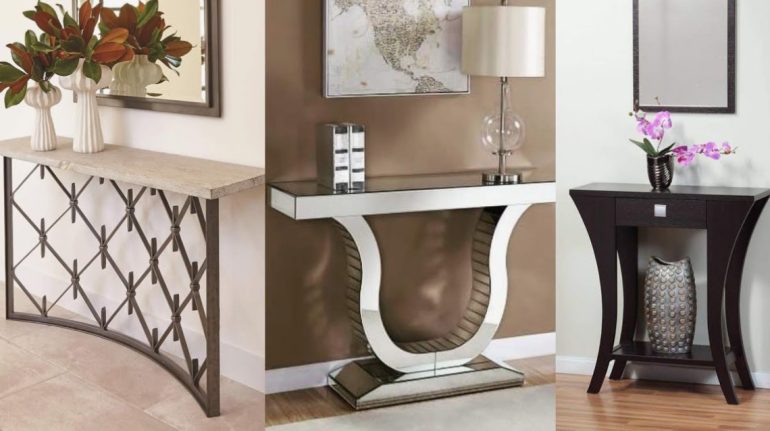
I remember the first time I truly appreciated a console table. It was during a particularly challenging project where my client lived in a lovely Georgian townhouse with the most awkward entrance hall you could imagine. The space felt cold, unwelcoming, and frankly, a bit lost.
Enter the humble console table and suddenly everything clicked into place. Rather like finding the missing piece of a puzzle, it transformed the space from a mere thoroughfare into a purposeful entrance.
Today, I want to walk you through exactly why console tables matter, how they function in modern homes, and why they’re often the quiet workhorses of great interior design.
What Is the Purpose of a Console Table?
A console table is a narrow, surface-level piece of furniture designed to provide function without occupying much space. It adds structure, storage, and styling opportunities in areas where bulkier furniture would overwhelm.
Console tables are best understood as problem-solvers. They define spaces without closing them off, add utility without clutter, and introduce visual interest without dominating a room.
In practical terms, they are used for:
- Creating a drop zone for keys, post, and daily essentials
- Displaying decorative items such as lamps, artwork, and photographs
- Adding functional surface space in hallways and living rooms
- Introducing subtle storage in tight or awkward areas
- Anchoring wall décor to create a more cohesive look
For a broader understanding of how tables function across interiors, you can explore this overview of tables in furniture design, which highlights their structural and practical roles in different settings.
Why Are Console Tables So Useful in Modern Homes?
Console tables are useful because they solve spatial inefficiencies in modern layouts, particularly in narrow or transitional areas like hallways and open-plan spaces.
In many homes, especially flats or townhouses, there are areas that feel incomplete but cannot accommodate large furniture. Console tables fill this gap perfectly.
They work particularly well in:
- Entrance halls where organisation is essential
- Living rooms needing visual balance behind sofas
- Corridors that feel empty or underutilised
- Dining rooms where extra serving space is needed
Their slim profile allows them to sit comfortably against walls without interrupting movement flow, which is critical in high-traffic areas.
Are Console Tables Only Decorative?
Console tables are not just decorative; they combine aesthetics with everyday practicality, especially when designed with integrated storage.
Console tables become even more valuable when they incorporate built-in storage. In busy homes, having drawers or shelves transforms them from decorative surfaces into practical organisational hubs, keeping everyday clutter neatly tucked away. If you’re looking to maximise both style and function, exploring a well-designed console table with storage can make a significant difference, especially in hallways where space is limited but organisation is essential.
This dual-purpose design is what makes them so effective. They can look refined and styled while quietly handling the mess of daily life.
What Are Standard Console Table Dimensions?
Console tables typically measure between 75–85 cm in height, 25–45 cm in depth, and 80–150 cm in width, depending on their intended use and placement.
The key dimension is depth. Unlike desks or dining tables, console tables are intentionally shallow to maintain clear walkways and avoid crowding.
General sizing guidelines:
- Height: 75–85 cm aligns well with most furniture
- Depth: 25–40 cm for hallways and narrow spaces
- Width: 80–120 cm for standard use, wider for statement pieces
Choosing the right size ensures the table enhances the space rather than obstructing it.
Why Are Console Tables So Narrow?
Console tables are narrow by design to maximise usability in tight spaces while maintaining a functional surface.
This slim depth is not a limitation; it is the feature that makes them so versatile. A deeper table would quickly become intrusive in areas like hallways or behind sofas.
The narrow profile allows them to:
- Fit comfortably in small or awkward spaces
- Maintain smooth traffic flow
- Provide just enough surface without visual heaviness
It’s a deliberate design choice that prioritises both practicality and proportion.
Where Should You Place a Console Table?
A console table works best when placed in transitional or underutilised spaces where it can add both structure and function.
Common placements include:
- Entryways to create a welcoming focal point
- Behind sofas to define open-plan living areas
- Along empty walls to break up blank space
- Under mirrors or artwork to anchor wall décor
- In dining rooms for serving or display
Placement should always balance accessibility with visual harmony.
How Do You Style a Console Table Properly?
Styling a console table involves layering functional and decorative items to create balance, height variation, and visual interest without clutter.
A well-styled console table should feel intentional but effortless. The goal is to combine practicality with personality.
Start with:
- A focal point such as a lamp, mirror, or artwork
- Mid-height objects like vases or stacked books
- Smaller accents such as candles or decorative pieces
Avoid overcrowding. Negative space is just as important as the objects themselves.
Do You Really Need a Console Table?
Most homes benefit from a console table because it adds function, structure, and subtle storage without taking up significant space.
If you have an empty wall, a cluttered hallway, or a space that feels incomplete, a console table is often the simplest and most effective solution.
They are particularly valuable if you:
- Struggle with everyday clutter near entrances
- Have narrow or awkward spaces
- Want to enhance a room without adding bulky furniture
- Need a flexible surface for both display and use
Final Thoughts on the Purpose of Console Tables
The real point of a console table is to quietly improve how your home works while elevating how it looks.
It is one of the few pieces of furniture that can adapt to almost any room, solve multiple problems at once, and still feel refined.
When chosen well and styled thoughtfully, a console table becomes more than just furniture. It becomes a functional anchor within your space, blending practicality with design in a way few other pieces can.
