
Best Time to Travel to Thailand: Your Ultimate Guide
Planning your dream trip to Thailand? Deciding when to visit is crucial for experiencing the Land of Smiles at its finest. This guide will help you navigate the nuances of Thailand’s climate, festivals, and peak seasons to ensure your travel dates align with your perfect tropical getaway. From basking in sunshine on stunning beaches to exploring ancient temples without the crowds, knowing the optimal time to go can transform your vacation.
Thailand’s Climate Zones and Seasons
Thailand boasts a diverse climate, generally categorized into three main seasons: cool, hot, and rainy. However, regional variations mean that what’s perfect in the north might be different in the south. Understanding these distinctions is key to choosing the best time for your adventure.
The Cool and Dry Season: Peak Tourist Time
The period from November to February is widely considered the best time to travel to Thailand. During these months, the weather is pleasant and dry across most of the country, with average temperatures ranging from 20°C to 30°C. This makes it ideal for outdoor activities, exploring cities like Bangkok and Chiang Mai, and relaxing on the southern islands.
This season also coincides with major festivals like Loy Krathong and Yi Peng (Lantern Festival), offering a magical cultural experience. However, it is also peak tourist season, meaning higher prices for flights and accommodation, and more crowded attractions.
Advantages of the Cool Season:
* Pleasant temperatures and low humidity.
* Abundant sunshine, perfect for beach holidays.
* Ideal for trekking and exploring the northern regions.
* Vibrant cultural festivals.
Disadvantages of the Cool Season:
* Highest tourist numbers.
* Increased travel costs.
* Popular destinations can be very crowded.
The Hot Season: Embracing the Heat
From March to May, Thailand experiences its hottest months, with temperatures often soaring above 30°C and humidity levels increasing significantly. While it can be intense, this period is still a good time to visit if you enjoy the heat and are looking for fewer crowds and potentially lower prices. The Songkran New Year festival, celebrated in mid-April, is a highlight of this season, known for its massive water fights.
The Songkran festival is one of the most anticipated events in Thailand, marked by joyous water splashing that symbolizes purification and the washing away of bad fortune.
This season is particularly suited for those who want to enjoy water-based activities and don’t mind the high temperatures.
The Rainy Season: Lush Landscapes and Fewer Tourists
The rainy season, running from June to October, brings much-needed relief from the heat with increased rainfall. While you can expect daily downpours, they are often short-lived, typically occurring in the afternoon or evening. The rain transforms the landscape into a lush, vibrant green, and it’s a fantastic time for budget travelers and those seeking a more tranquil experience.
Northern Thailand generally experiences less rain than the south during this period. Certain areas, like the Gulf coast islands (Koh Samui, Koh Phangan, Koh Tao), are less affected by the monsoon, making them a good choice for a beach holiday even during the “rainy” season.
Pros of the Rainy Season:
* Fewer tourists, leading to a more relaxed atmosphere.
* Lower prices for flights and accommodation.
* Stunning natural scenery due to abundant rainfall.
* Ideal for exploring waterfalls and jungle treks.
Cons of the Rainy Season:
* Intermittent heavy rainfall can disrupt travel plans.
* Sea conditions can be rough, affecting ferry services and diving.
* Some islands or activities might be less accessible.
Regional Variations and Best Times to Visit Specific Areas
While the general seasons provide a framework, understanding regional differences is vital for optimizing your trip.
The North (Chiang Mai, Chiang Rai)
The best time to visit Northern Thailand is during the cool, dry season (November to February) when the weather is perfect for exploring temples, mountains, and cultural sites. The shoulder months of March and October can also offer good weather with fewer crowds.
The South (Phuket, Krabi, Koh Samui)
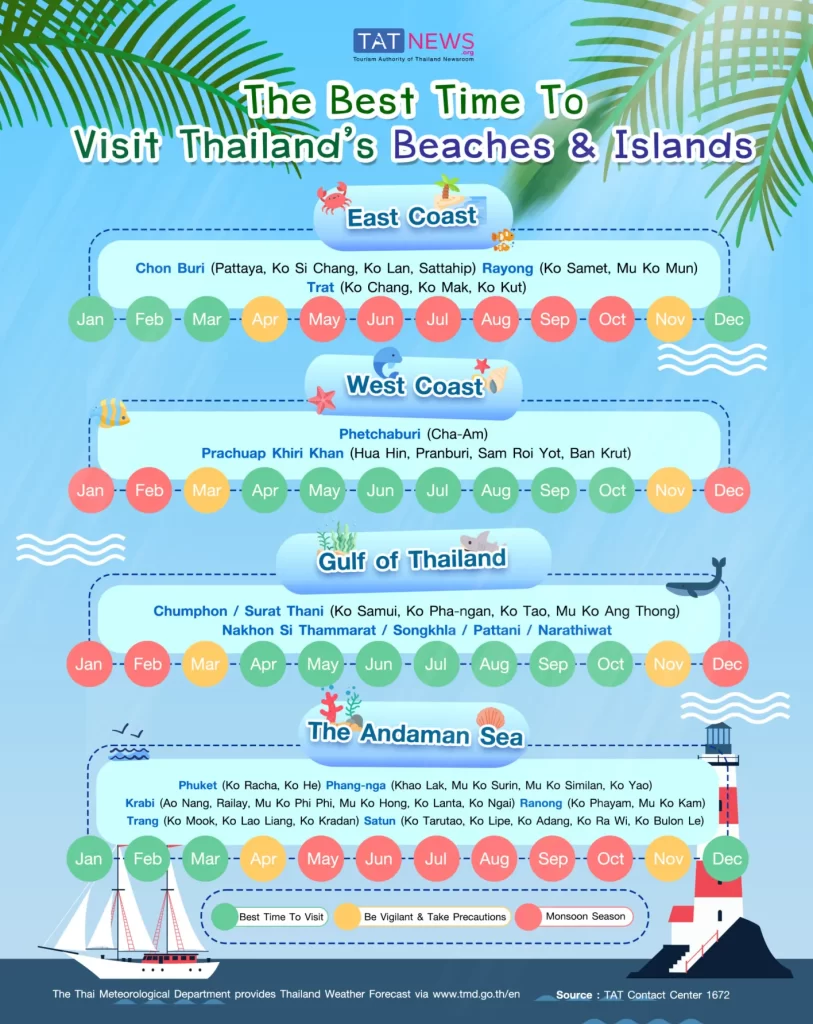
The southern Andaman coast (Phuket, Krabi) experiences its best weather from November to April, aligning with the cool, dry season. The Gulf coast (Koh Samui, Koh Phangan, Koh Tao) has a slightly different pattern, with its driest months typically being from December to March, and experiencing its own rainy season from October to November.
| Region | Best Time to Visit (Dry & Pleasant) | Alternate Good Time (Fewer Crowds) | Potential Considerations |
| :———— | :———————————- | :——————————— | :———————– |
| North | November – February | March, October | Can be cooler at night |
| Andaman Coast | November – April | May, October | High season crowds |
| Gulf Coast | December – March | April – June | Rainy season Oct-Nov |
When to Avoid Traveling to Thailand
While Thailand is a year-round destination, some periods are less ideal for certain types of travel. The peak hot season (March-May) can be challenging for those not accustomed to extreme heat. The height of the rainy season (July-September) might not be suitable for beach-focused holidays due to potential disruptions from heavy rains and rough seas.
For those sensitive to heat and humidity, avoiding the months of March through May is advisable.
Frequently Asked Questions
When is the cheapest time to go to Thailand?
The cheapest time to travel to Thailand is during the low season, which generally falls within the rainy season (May to October). However, the Gulf coast islands tend to be more affordable from May to September, outside of their local peak.
What is the weather like in Thailand in December?
December is part of Thailand’s cool and dry season. You can expect pleasant temperatures, low humidity, and plenty of sunshine, making it an ideal month for visiting most parts of the country.
Is it safe to travel to Thailand during the rainy season?
Yes, it is generally safe to travel during the rainy season. While you may encounter heavy downpours, they are usually short-lived. It is advisable to check local weather forecasts and be prepared for potential travel disruptions, especially for ferry services to smaller islands.
In conclusion, the best time to travel to Thailand largely depends on your priorities. For ideal weather and vibrant festivals, the cool dry season from November to February is unparalleled, though it comes with higher costs and crowds. If you prioritize budget and fewer tourists, the shoulder months or the rainy season can offer a rewarding experience, provided you are flexible with your plans. Always consider the specific region you intend to visit, as climate patterns can vary significantly across the country. By carefully weighing these factors, you can pinpoint the perfect time to embark on your unforgettable Thai adventure.
